
 @fellow99
dsh-desktop-hos
Electron 37 on HarmonyOS / OpenHarmony — run DeepSeek Harness (DSH) as a native 2in1 / tablet app. 鸿蒙上的 AI Agent 工作台
- Stars
- 4
- Language
- JavaScript
- Created
- Aug 28, 2026
- Updated
- Oct 21, 2026
Introduction
中文 | English
DSH Desktop · Electron on HarmonyOS Edition
Electron on HarmonyOS Edition — the official DeepSeek Harness (DSH) Web UI, unmodified, running on HarmonyOS 2in1 / tablet through Electron 37: a real Electron app on HarmonyOS, not an ArkUI rewrite of the interface. The other HarmonyOS edition, HarmonyOS Edition, drops Electron entirely — system ArkWeb plus an in-process Node runtime.
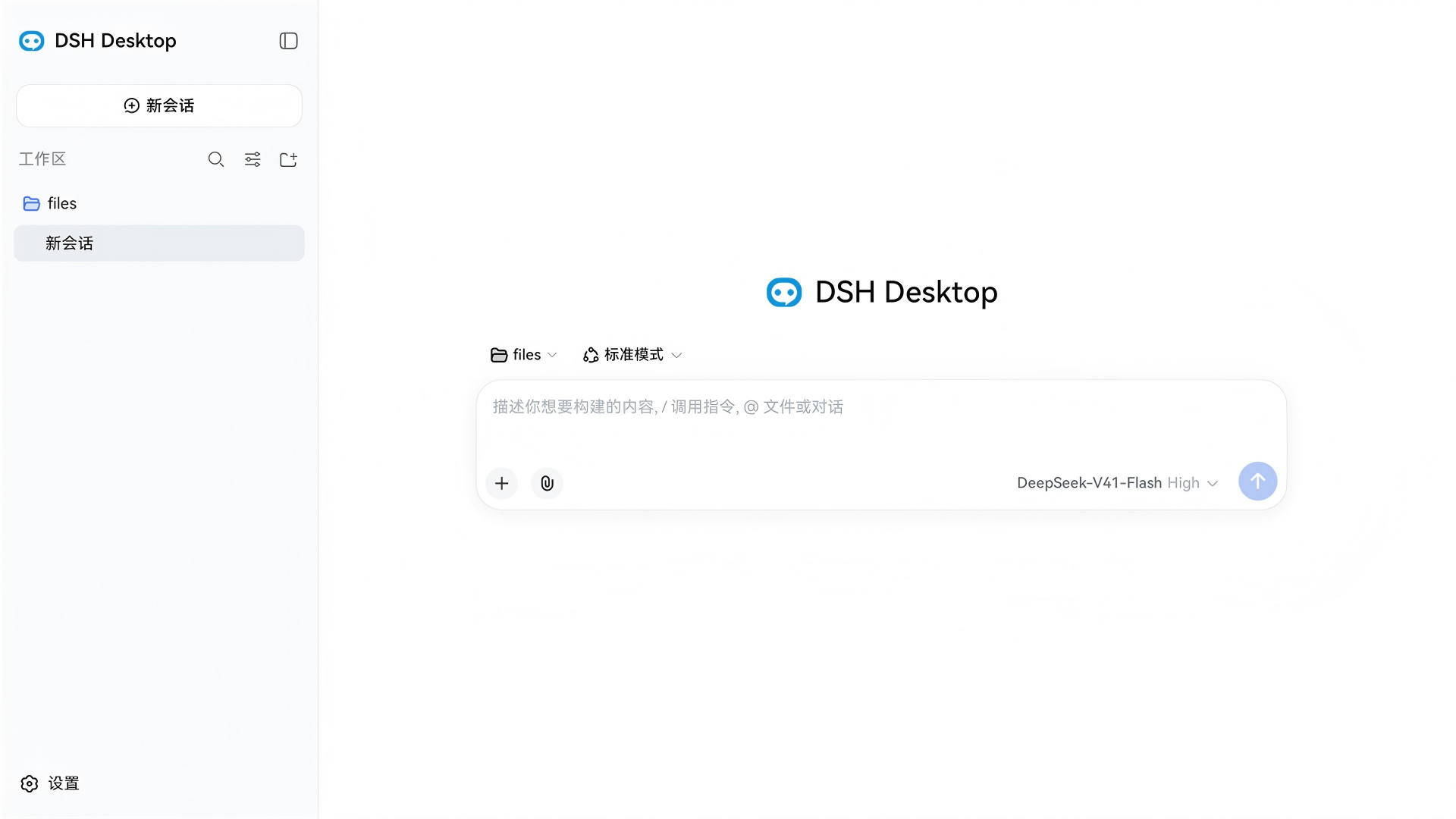
Device capture, not a mockup — HarmonyOS 6.1.0.135 (API 24), 2in1. The UI is the official dsh Web UI, loaded same-origin from the in-process dsh Host.





Status 0.2.1 (versionCode 1009) — built and signed. Core flows (chat, agent loop, tool calls, session persistence, plugin market, window state) were verified on a HarmonyOS 6.1.0.135 (API 24) device for 0.2.0; the 0.2.1 build has not been re-verified on device yet (build + signature verified only). Distribution reality up front: a debug-signed HAP is bound to the signing account/device, and a release-signed package can only ship through AppGallery — see How to get it.
Why this port is different
There are other ways to get DSH onto HarmonyOS. The trade-off is the whole story of this repo:
| This project (Electron route) | A native-host route (Node runtime + ArkUI host) | |
|---|---|---|
| Interface | The official Web UI, byte-for-byte — nothing re-implemented | A native host around the same Web content; platform chrome is rewritten |
| Fidelity to desktop | Identical semantics: same renderer, same Node APIs, same data plane | Good, but the host layer is a re-implementation that must track upstream |
| Runtime permission | Requires the ACL restricted permission ohos.permission.kernel.ALLOW_WRITABLE_CODE_MEMORY (JIT) — 2in1 / tablet only | No JIT, so no such permission |
| Device reach | HarmonyOS 2in1 / tablet | Can extend to phones |
Neither is "better"; they optimize different things. This repo exists to prove the Electron route end-to-end — including every sandbox conflict it hits. The other editions share the same shell architecture and data plane: dsh-desktop for Windows / Linux / macOS, and dsh-desktop-ark for the HarmonyOS Edition (system ArkWeb + an in-process Node runtime, no Electron).
What works today
| Capability | State |
|---|---|
| dsh Web UI in a window (100% reuse of the dsh frontend) | ✅ |
Session persistence + full-text search (better-sqlite3, aarch64 ABI 138) | ✅ |
Plugin marketplace (dshmarket built in) | ✅ |
| Window state persistence (maximized / bounds) + F11 fullscreen | ✅ |
Command execution — non-PTY resident /system/bin/sh driven by a sentinel-line protocol, with a tool-layer path fence | ✅ ⚠️ the fence is best-effort and bypassable, not a sandbox |
Image attachments — sharp replaced by a pure-JS container parser; conversions it cannot do are routed through the platform image framework by an ArkTS bridge (decode / EXIF / scale / re-encode) | ⚠️ clean 8-bit sRGB files pass through byte-identically; with no bridge reachable every conversion is refused with an explicit error; no thumbnails |
| Bundling our own Node / pnpm / Python runtime | ⛔ not possible — shipping an ELF requires a binary certificate (AGC certType: 4), which Huawei does not grant to individual developers. The host installing pnpm from the system terminal is an optional dependency, never a product capability |
Process sandbox (koffi / landlock) | ❌ out of scope |
Limits, in detail
- Command execution. Upstream's
tool-bashrow stays disabled:node-ptyhas no aarch64 artifact, and PTY is denied by SELinux. The replacement spawns a resident/system/bin/shand reads replies through a sentinel line; the path fence lives in the tool layer and is bypassable by design. - Bundled runtime. The app already sees
/data/service/hnp/binonPATHand a structurally validnodelives there — onlypnpmis missing. Once the user installspnpmfrom the system terminal (the symlink ban is app-domain-only, so it must not be installed from inside the app), the marketplace'sprobePnpm()succeeds and plugin install/uninstall works. Nothing else depends on a bundled runtime: command execution spawns the system's ownsh/toybox, and the file / search / skill / subagent / workflow / image features are pure JS. Analysis:docs/鸿蒙环境能力清单-v0.1.5.md§C.8. - Images. The stub parses PNG/JPEG/GIF/WebP container headers; anything it cannot convert is handed to the ArkTS bridge (decode, EXIF orientation, scale, re-encode to JPEG/WebP/PNG). Clean 8-bit sRGB input inside the limits passes through byte-identically at zero conversion cost. With no bridge reachable (plain Node), every conversion is refused with an explicit, attributed error. No thumbnails.
Deferred by decision, not by oversight: the frameless window (moving window controls into the renderer costs more than it buys) and launch-at-login (autoStartupManager exposes read-only queries only). The system tray ships today — status-bar icon plus right-click menu.
Screens
| Light | Dark | |
|---|---|---|
| Agent conversation — tool calls, session trace, model and cache telemetry | 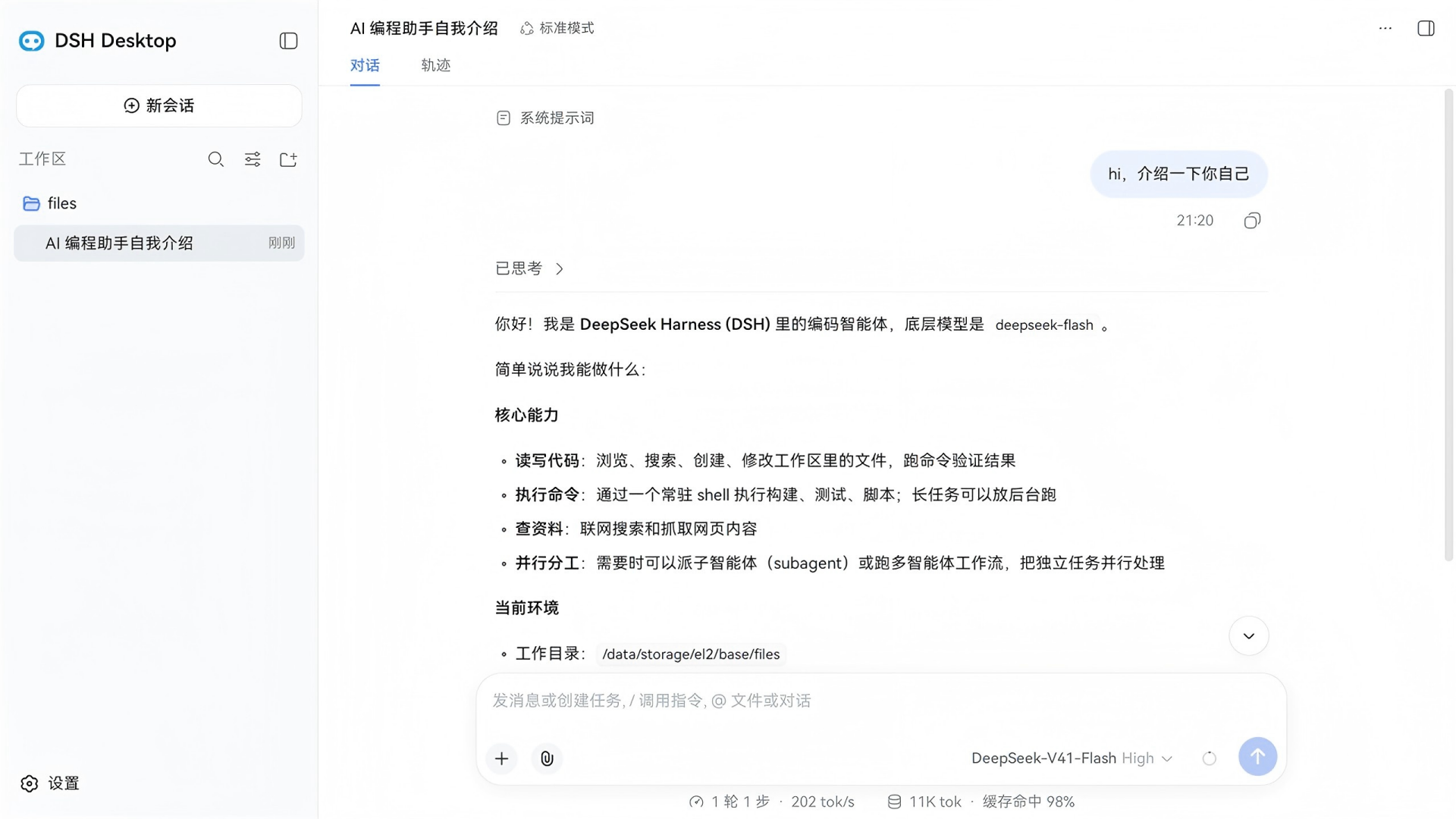 | 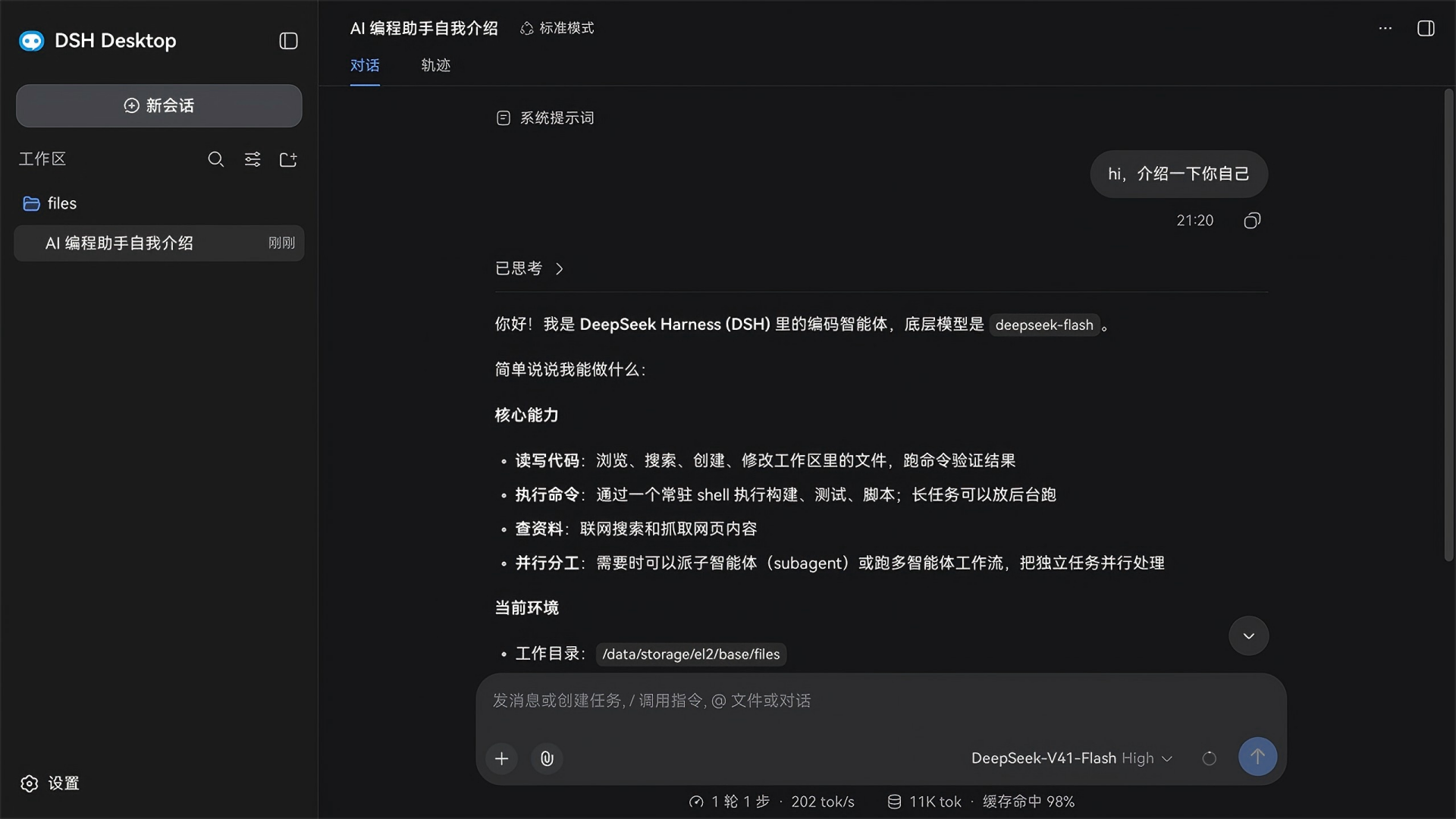 |
| Settings — models, plugins, agent presets, plugin market, appearance | 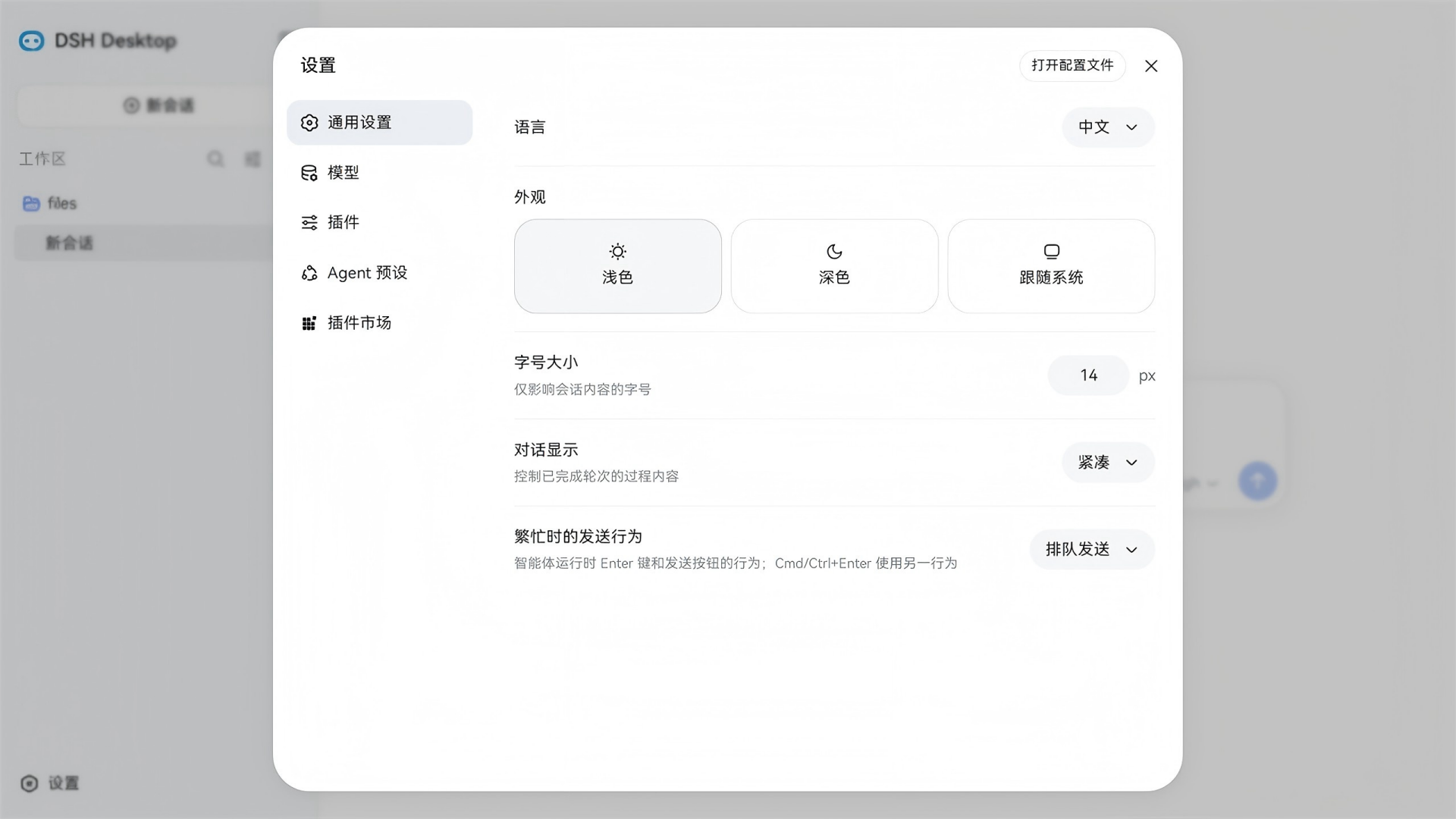 | 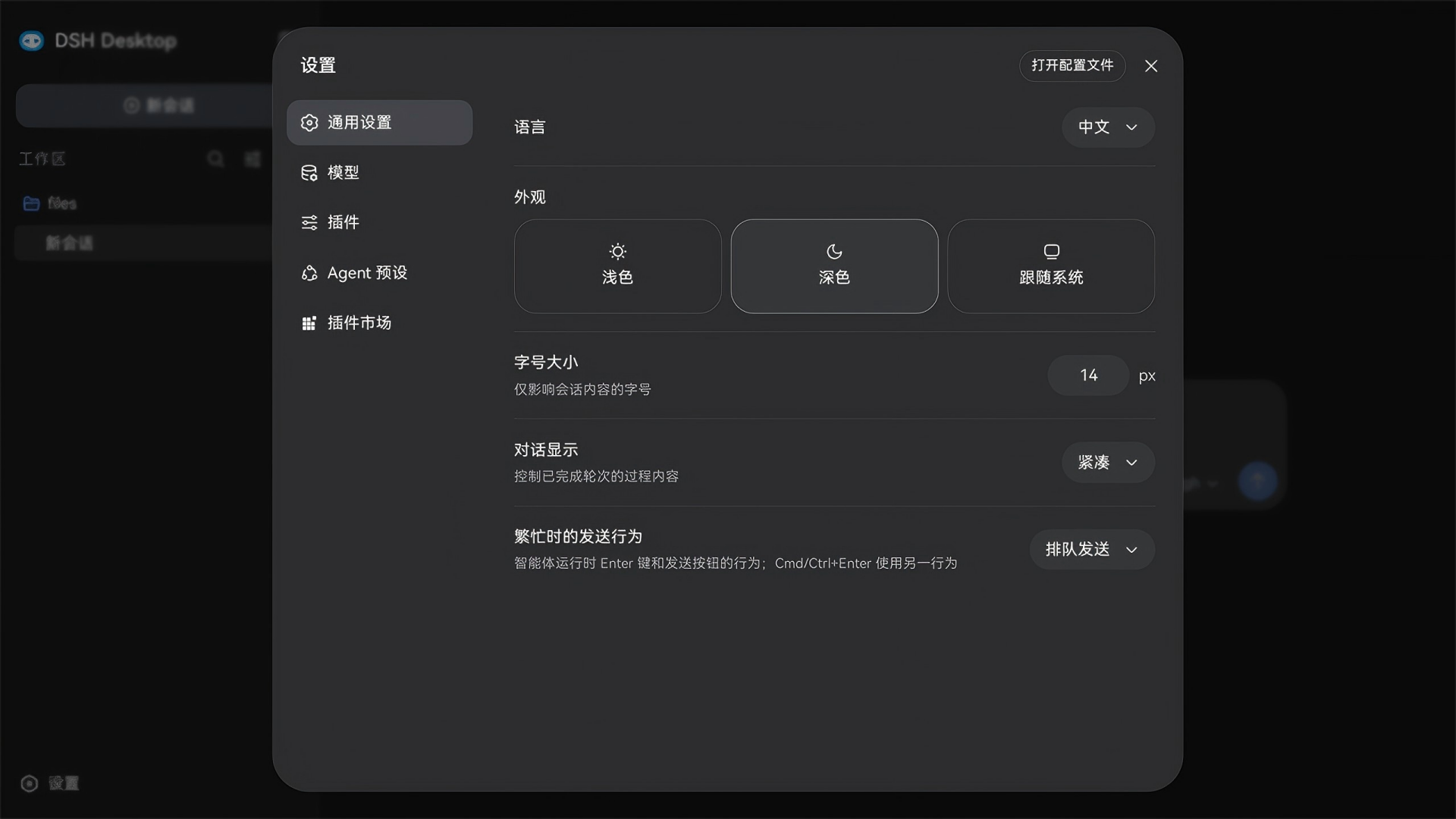 |
How to get it
Three routes, in order of convenience:
- AppGallery (planned). Release-signed App Packs can only be installed from AppGallery. Two prerequisites gate the listing: the ACL restricted permission (≈3 business days review, mainland-China developer accounts only) and the AI compliance track (algorithm filing / model registration / security assessment). See maintainer guide.
- Build it yourself — the supported route today. Four stages, then a local HAP:
collect-runtime → build-dsh → collect-dsh → tar, thenscripts/build-debug.ps1. See the maintainer guide. Requirements: DevEco Studio 4.0+, HarmonyOS SDK API 17+ (targetSdk 6.1.1(24)), Node 18+, pnpm@11, HDC. - Re-sign a debug build with your own account. A debug profile is device-bound, so someone else's debug HAP will not install on your machine; regenerate the profile in DevEco (
File → Project Structure → Signing Configs) and rebuild. See the maintainer guide.
⚠️
hdc app installon a release-signed package fails withcode:9568322 ... not trusted app source. For on-device regression use-BuildMode release -SignMode debug.
Compatibility
| Shell | dsh (upstream tag) | Runtime | Device / API | Verified |
|---|---|---|---|---|
0.2.1 · versionCode 1009 | dsh-v0.2.1-rc.2 | Electron 37 / Node 22.17.0 (harmonypc-electron) | HarmonyOS 6.1.0.135 · API 24 · 2in1 / tablet | built & signed; on-device re-verification pending (0.2.0 was verified) |
versionCode must be a number and must strictly increase on every AppGallery submission. Upstream dsh is a developer preview: each shell pins one tag, and patches/<dsh-tag>/ moves with it.
Architecture
One process, one origin on the device: the Electron main process hosts the dsh Host (webserver + API + WebSocket) and the window loads the standard dsh Web UI from it — no CORS, no auth, no custom protocol, no IPC carrier.
EntryAbility (ArkTS) → Electron-on-HarmonyOS → main process (Node 22.17)
  └─ dsh Host: webserver on 0.0.0.0:<port> · apiProxy · connection
  └─ window: the unmodified dsh Web UI, loaded same-origin from that port
Three HarmonyOS adaptations make it work: loopback isolation (bind a wildcard address, then rewrite Host/Origin back to loopback inside the session), no symlinks or hardlinks (copy for profile publishing, same-directory rename for atomic writes), and HOME redirection into the sandbox. Because the listener is wildcard, treat this as a single-user local app and keep it off untrusted networks. The patch list, threat notes and the full rationale live in the maintainer guide.
Tech stack
- Electron-on-HarmonyOS runtime (
harmonypc-electron) — Electron 37 / Node 22.17.0 - ArkTS / ArkUI (Stage model) with the
web_enginebridge HAR - Upstream
deepseek-harnesspinned atdsh-v0.2.1-rc.2; this shell's patches live inpatches/dsh-v0.2.1-rc.2/
Build, sign & install
Requirements: DevEco Studio 4.0+ or the Command Line Tools, HarmonyOS SDK API 17+ (target 6.1.1 / API 24), Node 18+, pnpm, hdc.
node scripts/collect-runtime.mjs    # ① copy the runtime, then re-apply this app's customizations
node scripts/build-dsh.mjs          # ② apply the 13 patches, build dsh + dsh-market
node scripts/collect-dsh.mjs        # ③ materialize dsh-dist
powershell scripts\build-debug.ps1  # ④ build + sign the HAP
hdc app install -r entry/build/default/outputs/default/entry-default-signed.hap
Signing material never enters the repository (signing.<mode>.local.json, gitignored). Release signing, the ACL restricted permission, AppGallery submission, on-device debugging and the four-stage pipeline are documented in the maintainer guide.
Directory structure
This project and the 3 consumed projects plus 1 architecture-reference project live in sibling directories (not submodules):
(sibling directories)
├── dsh-desktop-hos/      # This project (HarmonyOS HAP, HarmonyOS desktop port)
│   ├── AppScope/                  # App scope (icon/name/signing)
│   ├── electron/                  # Entry module (copied from harmonypc-electron, contains SOs)
│   ├── web_engine/                # Bridge HAR (ArkTS bridge layer + resfile carries dsh artifacts)
│   ├── src-main/                  # Main process main.js (extract + runProfile + loadURL + HarmonyOS adaptations)
│   ├── scripts/                   # Four-stage build: collect-runtime → build-dsh → collect-dsh, plus build-debug / build-release
│   ├── runtime-overlays/          # App customizations re-applied after every runtime copy (prune + overlay)
│   ├── profiles/desktop/          # Custom desktop profile (cordis.patch.yml + package.json)
│   ├── patches/                   # dsh upstream patches (14)
│   ├── docs/                      # Engineering plan and final implementation record
│   ├── plugins/                   # This project's own plugins (harmony-plugin-XXX; baked into the HAP, all loaded by default)
│   ├── skills/                    # This project's own tool skills (kebab-case, no prefix; shipped in the HAP as the bundled skill root)
│   └── specs/                     # Spec documents (as-built; see specs/README.md for index)
│
├── harmonypc-electron/            # Electron-on-HarmonyOS runtime (Electron 37 / Node 22.17.0)
│   └── ohos_hap/                  # electron + web_engine modules + SO source (collect-runtime copy source)
│
├── deepseek-harness/              # The wrapped host (dsh, source reference, not a submodule)
│   ├── apps/                      # cli (dsh bin / profile-boot), web (frontend, build:web produces dist)
│   ├── packages/                  # host / client / core / session workspace packages
│   ├── vendor/                    # vendored cordis framework packages (cordis / loader / hmr / …)
│   └── native/                    # landlock-run native module (Linux sandbox, cut in MVP)
│
└── dsh-market/                    # Plugin marketplace (source reference, npm pkg "dshmarket")
    ├── src/                       # host half (mounts /dsh-market/* routes)
    ├── client/                    # browser half (settings-page UI)
    ├── lib/                       # compiled host output (materialized into dsh-dist/node_modules/dshmarket)
    └── cordis.patch.yml           # loader insert declaration ({ id: dsh-market, name: dshmarket })
../dsh-desktopis an architecture-design reference (reuses its architecture decisions + patches + main-process orchestration logic) and does not participate in this project's build/packaging.
Related docs
- docs/鸿蒙环境能力清单-0.2.1.md — capability inventory for 0.2.1: what works on this edition, what does not, and how the ArkWeb edition compares
- docs/构建签名与上架.md — maintainer guide: architecture, tech stack, build stages, signing, on-device debugging, AppGallery submission
- docs/工程规划.md — full engineering plan + final implementation record (Electron 37 landing, key adaptation changes, MVP trade-offs, cross-compilation optimization path)
- specs/README.md — spec document index (project-level + 9 module spec/plan, as-built)
References
- deepseek-harness (sibling directory
../deepseek-harness) — the wrapped host; itsdocs/directory contains full architecture docs - dsh-market (sibling directory
../dsh-market) — the built-in visual plugin marketplace (npm packagedshmarket), materialized viacollect-dsh.mjs - harmonypc-electron (sibling directory
../harmonypc-electron) — the Electron-on-HarmonyOS runtime - dsh-desktop (sibling directory
../dsh-desktop) — architecture-design reference (Electron desktop shell) - dsh-desktop-ark (sibling directory
../dsh-desktop-ark) — the HarmonyOS Edition: same dsh Host onohos-node-bridge(in-process Node v24.2.0), rendered by the system ArkWeb, no Electron - DSH Desktop website — all three editions, real device screenshots, and the architecture story in one page
License
MIT © 2026 fellow99